MVP vs MMP vs MLP: Which Does Your Startup Need?
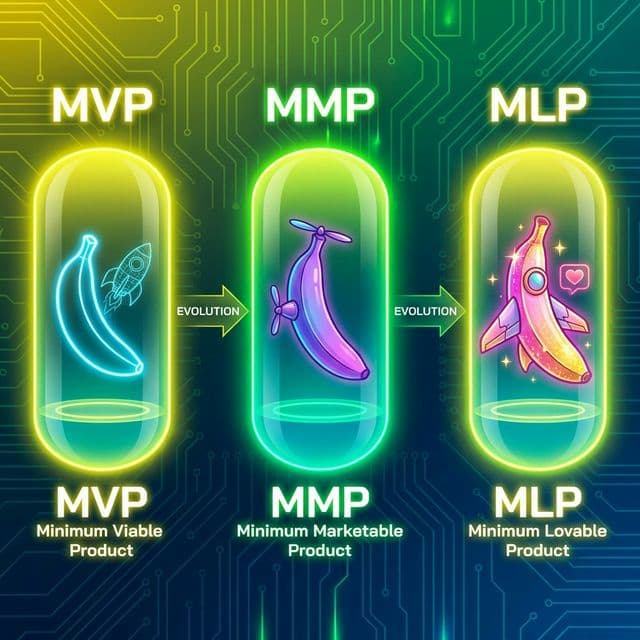
Not Everything Is an MVP
The term MVP (Minimum Viable Product) is used so much it's lost meaning. Not every initial product is an MVP, and it's not always what you need.
Let's clarify the difference between the three initial product strategies and when to use each.
MVP: Minimum Viable Product
What Is It?
The simplest version of your product that allows you to learn about your users.
Characteristics
- Focused on validating hypotheses
- Can have basic UX
- Learning metrics over monetization
- Limited audience (early adopters)
When to Use It
✅ Completely new, unvalidated idea ✅ Uncertain market ✅ Very limited budget ✅ Need data before investing more
Real Example
Dropbox launched with a video demonstrating the concept before building the product. They validated demand without writing code.
MMP: Minimum Marketable Product
What Is It?
The minimum version you can sell in the market. It's an MVP with an acceptable quality level to charge for.
Characteristics
- Complete features (though few)
- Polished UX
- No critical bugs
- Ready for monetization
When to Use It
✅ Already validated the idea ✅ Need to generate revenue ✅ Brand reputation matters ✅ Competition demands minimum quality
Real Example
Slack launched as an MMP: few features but all very polished. They charged from day 1.
MLP: Minimum Lovable Product
What Is It?
The minimum version that generates love in users. It doesn't just work—it delights.
Characteristics
- Memorable experience
- Surprising details
- Premium design
- Generates word-of-mouth
When to Use It
✅ Competitive market ✅ B2C lifestyle product ✅ Growth via virality ✅ Users are your marketing
Real Example
Superhuman (email client) launched with a premium experience. 100k person waitlist because users loved and shared it.
Direct Comparison
| Aspect | MVP | MMP | MLP | |--------|-----|-----|-----| | Goal | Learn | Sell | Delight | | UX | Functional | Polished | Exceptional | | Timeline | 2-4 weeks | 4-8 weeks | 8-12 weeks | | Investment | Low | Medium | High | | Audience | Early adopters | General market | Premium | | Metrics | Engagement | Revenue | NPS/Virality |
How to Choose
Choose MVP if:
- [ ] No certainty the problem exists
- [ ] Target market tolerates new products
- [ ] Failure won't damage your brand
- [ ] Need to conserve capital
Choose MMP if:
- [ ] Already validated problem and solution
- [ ] Need to generate income soon
- [ ] Market expects certain quality
- [ ] Have established competitors
Choose MLP if:
- [ ] Product is B2C and experiential
- [ ] Word-of-mouth is main channel
- [ ] Competition is intense
- [ ] Have resources to invest in experience
The Typical Path
Most successful startups follow this progression:
MVP → Validation → MMP → Revenue → MLP → Scale
- MVP: Validate someone wants your product
- MMP: Confirm someone will pay for it
- MLP: Scale with users who love it
Common Mistake: Skipping Steps
Many founders want to start with MLP because they want their product to be "perfect." This is a mistake because:
- You invest a lot before validating
- "Perfect" in your mind ≠ what users want
- You unnecessarily extend time-to-market
"Done is better than perfect. Perfect is never finished." — Sheryl Sandberg
Conclusion
There's no universal correct strategy. It depends on:
- Your validation stage
- Your market and competition
- Your available resources
- Your growth model
The important thing is being conscious of what you're building and why.
Don't know which you need? Tell us about your project and we'll help you decide.